Exploring how Cambridge pathways, Finnish learning, STREAM education, Entrepreneurship, Robotics, Startup Exposure, WOSSETS, Performing Arts and Creative Arts are helping children develop skills for a changing world.
Education is changing, and the needs of today’s children are very different from those of previous generations. In a world shaped by artificial intelligence, technology, innovation and rapidly evolving careers, academic knowledge alone is no longer enough. Children need opportunities to think independently, solve problems, communicate confidently, collaborate with others and turn their ideas into action.
This is where Experiential Learning is becoming increasingly important.
Instead of limiting education to textbooks, lectures and examinations, experiential learning encourages children to learn through exploration, experimentation, practical activities and real-world experiences. It allows students to understand concepts by doing, questioning, creating and discovering.
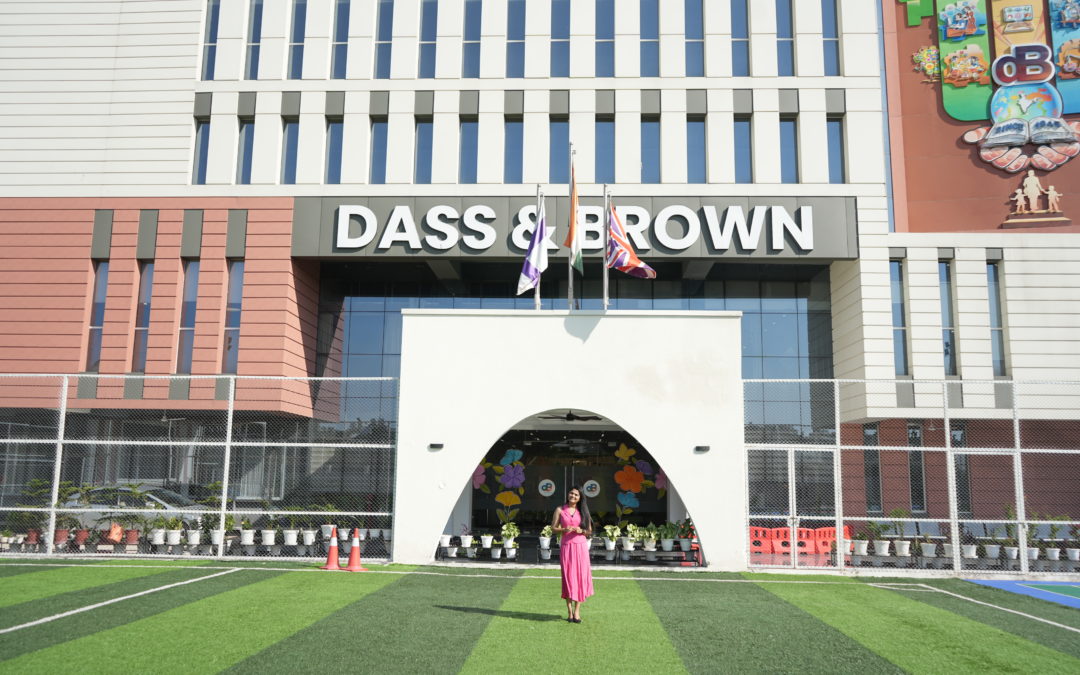
At Dass & Brown Experiential Learning School (Dbels), Panchkula, this philosophy is reflected in an educational approach that brings together international curricula, technology, entrepreneurship, creativity, ethics and sports to create a more holistic learning environment.
Let’s explore how these different elements are helping shape the future of education.
1. Experiential Learning: Making Education Meaningful
Children often understand concepts better when they experience them rather than simply memorising information.
Imagine a child learning about science by conducting an experiment, understanding mathematics through practical applications, or developing communication skills by presenting an idea in front of classmates. These experiences make learning more engaging and meaningful.
Experiential learning encourages children to:
- Ask questions and develop curiosity.
- Think critically and solve problems.
- Work collaboratively and communicate effectively.
- Learn through experimentation and discovery.
- Build confidence by applying classroom knowledge to real-life situations.
At Dass & Brown Experiential Learning School (Dbels), the emphasis on experiential education encourages students to become active participants in their learning journey rather than passive recipients of information.
2. A Thoughtful Beginning with Mother’s Lap and Finnish Learning
The foundation of a child’s learning journey begins in the early years. During this stage, children develop social, emotional, language and cognitive skills that influence their future development.
Dass & Brown’s Mother’s Lap welcomes little ones from the age of two, offering a nurturing environment where early learning can begin through exploration, interaction and age-appropriate activities.
From KG to Prep II, the school follows a Finnish curriculum approach that emphasises joyful, hands-on learning.
Rather than focusing only on formal instruction, this approach encourages children to develop:
- Curiosity and creativity.
- Early literacy and numeracy skills.
- Communication and social interaction.
- Independent thinking and confidence.
- An interest in discovering the world around them.
Thoughtfully designed classrooms, child-friendly infrastructure and interactive learning spaces further support this early learning experience.
The idea is simple: children should develop a love for learning from the very beginning.
3. Cambridge International Education for a Global Perspective
As children progress through school, their educational needs evolve. They need a strong academic foundation along with the ability to analyse information, express ideas and understand different perspectives.
The Cambridge pathway at Dass & Brown is designed to encourage independent thinking, academic development and global perspectives.
The school offers:
- Grades I to VIII: Cambridge pathway enriched with entrepreneurship and innovation.
- Grades IX and X: Cambridge IGCSE.
- Grades XI and XII: Cambridge International AS and A Levels.
The Cambridge approach encourages students to move beyond simply remembering information. It promotes understanding, application, research, analysis and independent learning.
Combined with experiential learning, this provides opportunities for students to connect academic concepts with practical situations and develop skills that can support them in higher education and future careers.
4. STREAM Education: Connecting Different Areas of Learning
The world does not operate in separate subjects, and neither should learning.
STREAM education brings together:
- S – Science
- T – Technology
- R – Reading
- E – Engineering
- A – Arts
- M – Mathematics
This integrated approach allows children to explore connections between different subjects and apply their knowledge to practical challenges.
For example, students may use mathematics while designing a model, apply scientific concepts during experiments, use technology to research a topic or combine engineering and creative thinking to develop a solution.
Dedicated science and technology laboratories, mathematics learning spaces, reading resources and creative learning environments support this approach.
STREAM education helps develop creativity, logical reasoning, scientific thinking, innovation and problem-solving abilities.
It also helps children understand that learning is interconnected and that different skills can come together to solve real-world problems.
5. Robotics, Artificial Intelligence and Technology-Enabled Learning
Technology is transforming almost every industry, making digital understanding and technological confidence important skills for the next generation.
Introducing children to robotics, coding and artificial intelligence at school gives them opportunities to understand how technology works and how it can be used to solve problems.
At Dass & Brown, technology-enabled learning includes exposure to AI, robotics, coding and hands-on technology projects.
Students get opportunities to experiment, build, test and understand the practical applications of technology.
The focus is not simply on using digital devices. It is about developing the ability to think logically, understand processes, create solutions and use technology responsibly.
With modern learning infrastructure and dedicated technology spaces, students can begin exploring concepts that are becoming increasingly relevant in the world around them.
6. Entrepreneurship Education: From Ideas to Innovation
One of the most interesting shifts in modern education is the growing importance of entrepreneurship.
Children should not only learn how businesses work; they should also get opportunities to identify problems, think of solutions, develop ideas and understand how those ideas can become reality.
Dass & Brown places a strong emphasis on entrepreneurship education through Y-Hub, its Entrepreneurship Development Centre.
Through Y-Hub, students are introduced to innovation, leadership, critical thinking and entrepreneurial problem-solving.
The experience goes beyond theoretical business lessons. With access to incubation cells, pitch rooms and innovation labs, students have spaces to develop ideas, work on projects, build prototypes and present their innovations.
This also creates opportunities for startup exposure, helping students understand the journey from identifying an idea to developing and communicating a possible solution.
Entrepreneurship education can help children develop:
- Leadership and decision-making.
- Financial and business awareness.
- Creativity and innovative thinking.
- Confidence in presenting ideas.
- Collaboration and teamwork.
- Resilience and the ability to learn from setbacks.
These skills are valuable even for children who may eventually choose careers outside entrepreneurship. The ability to take initiative, think independently and find solutions is relevant across almost every profession.
MoU with Startup Haryana, TiE Chandigarh, Innovation Mission Punjab. Students pitch ideas at TEISCON, IDEATE Fest and TYE Global Program
7. WOSSETS, Ethics and Etiquette: Learning Values for Life
Education is not only about academic performance or professional success. It is also about the kind of individuals children become.
Respect, empathy, responsibility, communication and good conduct are essential qualities that help children build meaningful relationships and contribute positively to society.
Through WOSSETS and its focus on ethics and etiquette, Dass & Brown emphasises the importance of social etiquette, values and responsible behaviour.
Children need opportunities to understand how to communicate respectfully, interact confidently, appreciate differences and conduct themselves in different social situations.
These lessons help build emotional awareness, self-confidence and a sense of responsibility.
Because while academic knowledge may open doors, values and character influence how individuals navigate the world beyond those doors.
8. Personalized Learning Pathways
Every child has different interests and strengths. Some may enjoy music, others may discover their confidence through theatre, dance, painting or creative expression. A well-rounded educational environment should give children opportunities to explore these interests alongside academics.
At Dass & Brown, personalised learning encourages children to discover their interests and develop their individual abilities through different avenues.
These include:
Performing Arts
Performing arts give children opportunities to express themselves through music, dance, theatre and stage performances. These activities can help develop confidence, communication, coordination and self-expression.
Creative Arts
Creative arts encourage imagination, originality and independent thinking. Through artistic activities, children get opportunities to experiment with ideas, explore different forms of expression and develop their creative abilities.
Sports
Physical activities play an important role in a child’s overall development. Students have opportunities to explore different sports, including:
- Taekwondo
- Basketball
- Football
- Swimming
- Skating
- And several other sporting activities.
These activities encourage discipline, teamwork, perseverance, coordination and confidence.
Clubs for Personal Development and Skills
Clubs provide students with additional opportunities to explore their interests, discover new areas of learning and develop useful skills. Participation in different clubs can encourage collaboration, leadership, communication and personal development.
The idea is to give children the freedom and opportunities to discover what they enjoy, recognise their strengths and develop abilities beyond academics.
9. AM/PM Sports: Building Confidence, Discipline and Teamwork
Physical development is an important part of a child’s overall growth. Sports teach lessons that extend far beyond the playing field.
Through regular physical activity, children learn discipline, teamwork, perseverance, coordination and the importance of maintaining a healthy lifestyle.
Dass & Brown provides opportunities for students to participate in a range of sporting activities, including swimming, skating, shooting, basketball and other indoor and outdoor sports.
The AM/PM sports approach adds another dimension to the school experience by giving importance to sports and physical development alongside academic learning.
Whether a child is learning a new sport, participating in a team activity or working towards improving individual performance, these experiences can help develop confidence, resilience and a positive attitude.
10. State-of-the-Art Learning Infrastructure for a Changing World
A modern learning environment should support different ways of learning.
Thoughtfully designed classrooms, interactive learning spaces, dedicated laboratories, a Learning Resource Centre and technology-enabled facilities can help create an environment where students have access to different learning experiences.
At Dass & Brown, the emphasis on modern infrastructure supports academic learning, research, experimentation, creativity and practical exploration.
The Learning Resource Centre provides students with a space for reading, research and independent learning, while specialised laboratories and activity spaces support hands-on experiences across different subjects.
The aim is to create an environment where students can move beyond traditional classroom learning and explore knowledge through different formats and experiences.
Preparing Children for More Than Just Examinations
The future will belong to individuals who can adapt, communicate, collaborate, innovate and approach challenges with confidence. This is why education needs to evolve beyond the traditional idea of academic success.
Experiential learning, international curriculum pathways, STREAM education, robotics, entrepreneurship, startup exposure, ethics, performing arts and sports all contribute to developing different dimensions of a child’s personality.
The school also brings together additional learning resources and specialised facilities, including Britannica and its Centre of Excellence. Dedicated spaces such as MORIC (Maths Online Research and Innovation Centre), the Robotics and Emerging Technology Lab, Niels Bohr Lab, Feynman Lab and CAD Lab further support opportunities for research, experimentation and technology-based learning.
Beyond academics, student development also involves guidance, support and planning for the future. The CARE Centre (Counselling and Rehabilitation for Empowerment) and CAP Cell (Career Counselling and Admission Pathway) add further dimensions to the school’s approach to student support and career guidance.
The real value of a holistic educational approach lies in giving children opportunities to discover their strengths, understand their interests and develop the confidence to explore new possibilities.
At Dass & Brown Experiential Learning School, Panchkula, these elements come together to create a learning environment that aims to prepare children not just for examinations, but for life beyond school. Because education should not simply teach children what the world looks like today. It should empower them with the curiosity, skills and confidence to shape the world of tomorrow.
Explore a learning journey that goes beyond textbooks.
Admissions Open for 2027–28 at Dass & Brown Experiential Learning School, Panchkula.
Contact: Parents can connect with the school to learn more about its programmes, admission process and campus experience.

- Beyond Textbooks: How Experiential Learning is Shaping the Future of Education at Dbels - November 27, 2026
- Real Estate Course in Hindi Launched by Top Real Estate Influencer Technocrat Anshul - July 7, 2026
- Baby Monitors with Noise Monitoring: How They Work and Why They Matter - October 2, 2025
- Attachment Parenting Guide: Principles, Practices, and What to Expect - September 9, 2025
- Understanding Your Baby’s Cry: A Parent’s Mini Guide - June 23, 2025
- Bottle vs. Breastfeeding: What Works for You and Your Baby - June 18, 2025
- 10 Yoga Poses For Kids at Home: Benefits Of Yoga For Kids - June 12, 2025
- Parenting Guide to Child Development: Key Milestones from Birth to 10 Years - June 4, 2025
- Summer Vacation Plans Ideas with Kids - May 27, 2025
- Nutritious Dried Fruit Treats for Toddlers (16–24 Months) - May 25, 2025